How Algonauts works

Show the work. Coach the gap. Interview what matters.

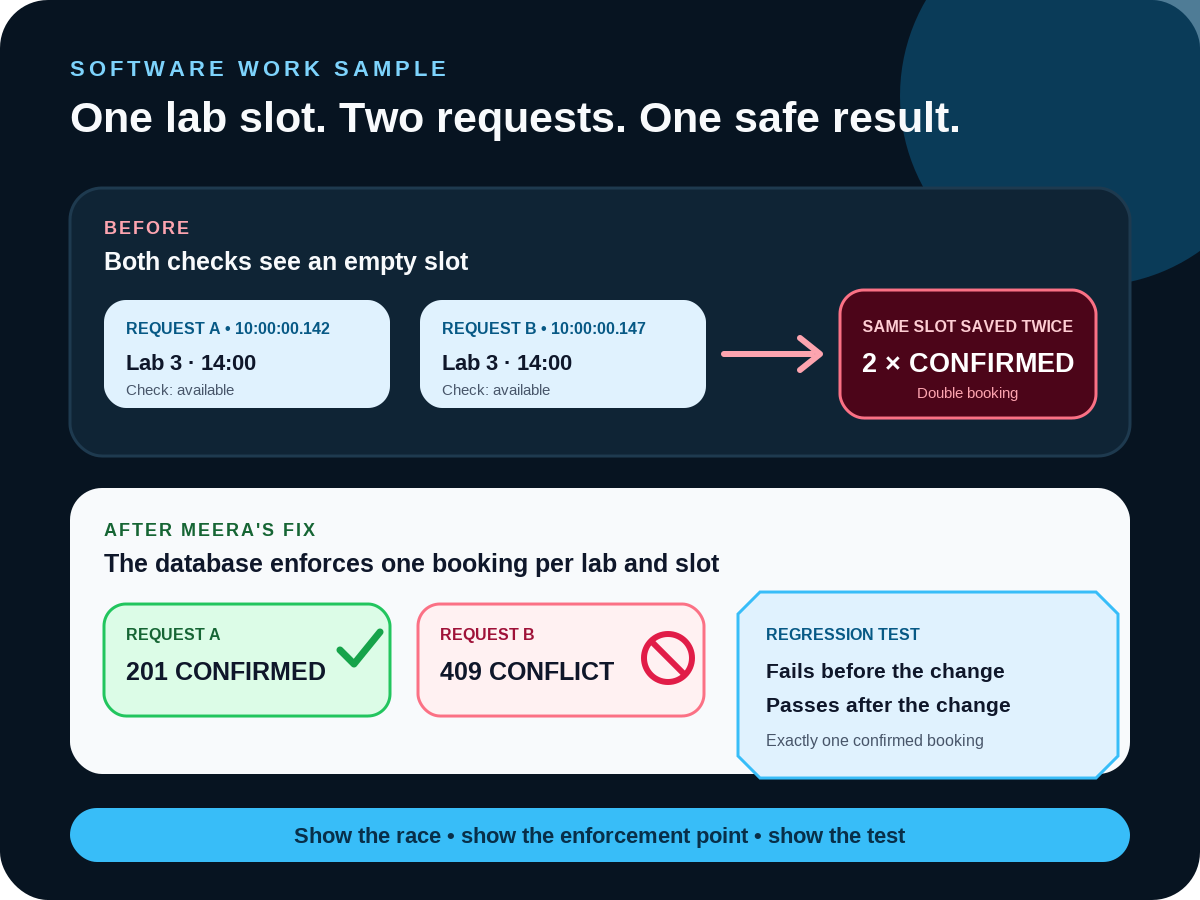
Meera, a Computer Science fresher, prevents two students from booking the same software lab slot. Her tested fix becomes evidence a placement officer can coach and an employer can question in a real interview.

Two simultaneous requests for the same software lab slot: before Meera's fix both are confirmed, after the fix one succeeds and one receives a conflict response
Meera can show the failing case, the fix and the regression test that keeps the slot from being double-booked.

Example walkthrough

Meera's fix becomes three useful decisions.

The same tested contribution helps Meera state what she did, helps her placement officer choose the next practice, and gives a hiring manager a sharper interview question.

1 · Student evidence

Meera shows the failure and the test.

She adds a software-engineering headline, relevant skills and a read-only portfolio link to her profile. Her résumé claim names her contribution without claiming the entire project.

Claim: Prevented concurrent lab-slot bookings with a database constraint and regression test.

Proof: Two requests, one confirmed booking, one conflict response.
2 · Placement coaching

The officer practises the weak explanation.

For an associated student, an authorised placement officer can use Meera's profile and detailed quarterly LayersRank context, then personally choose the coaching action.

Coaching prompt

“Why can two requests both pass a check before either booking is saved, and where does your fix enforce the rule?”

3 · Employer interview

The manager tests the remaining risk.

After Meera applies, the employer can review her approved profile, linked work and overall LayersRank. The interview still decides whether she meets this role's bar.

Interview question

“If the client retries the same booking after a timeout, how would you avoid creating a second reservation?”

What improvedMeera moves from “I fixed a bug” to an explanation of the race, the enforcement point and the regression case.
What assessment context addsReadiness context for practice and review, not an automatic verdict on Meera or the job.
What people decideMeera owns the claim, the officer chooses coaching, and the employer runs the interview and hiring decision.

Two more work samples

Different roles need different evidence.

A useful profile does not flatten every fresher into a coding example. The work sample should resemble the decisions the role will require.

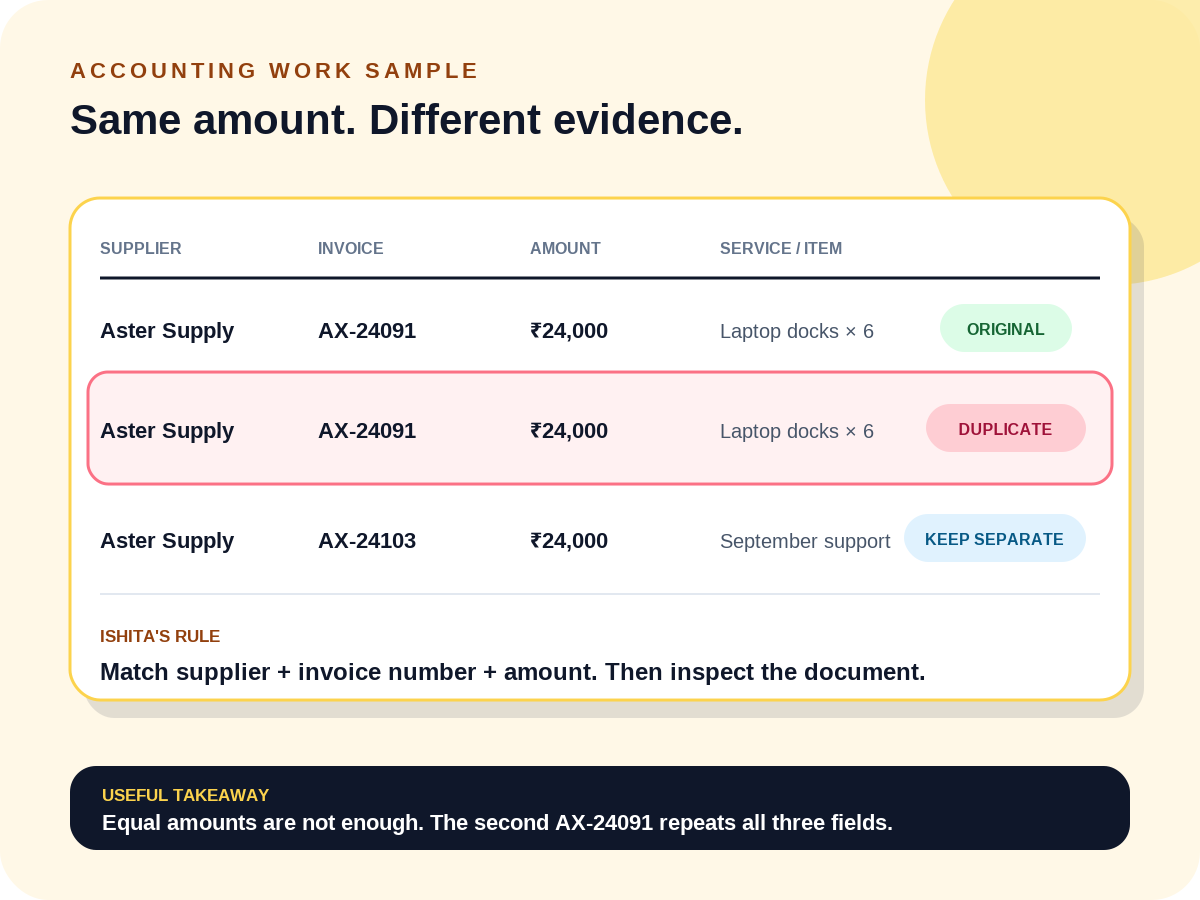
Three invoice rows: Ishita identifies the second ₹24,000 entry as a duplicate while keeping a recurring ₹24,000 service invoice separate

Ishita · Accounting operations

Find the duplicate without blocking a valid recurring invoice.

Work sample: supplier, invoice number and amount matched together, with the flagged row routed for document review.

Interview question: “A credit note uses the original invoice number. What would you check before anyone stops payment?”

See commerce and finance paths
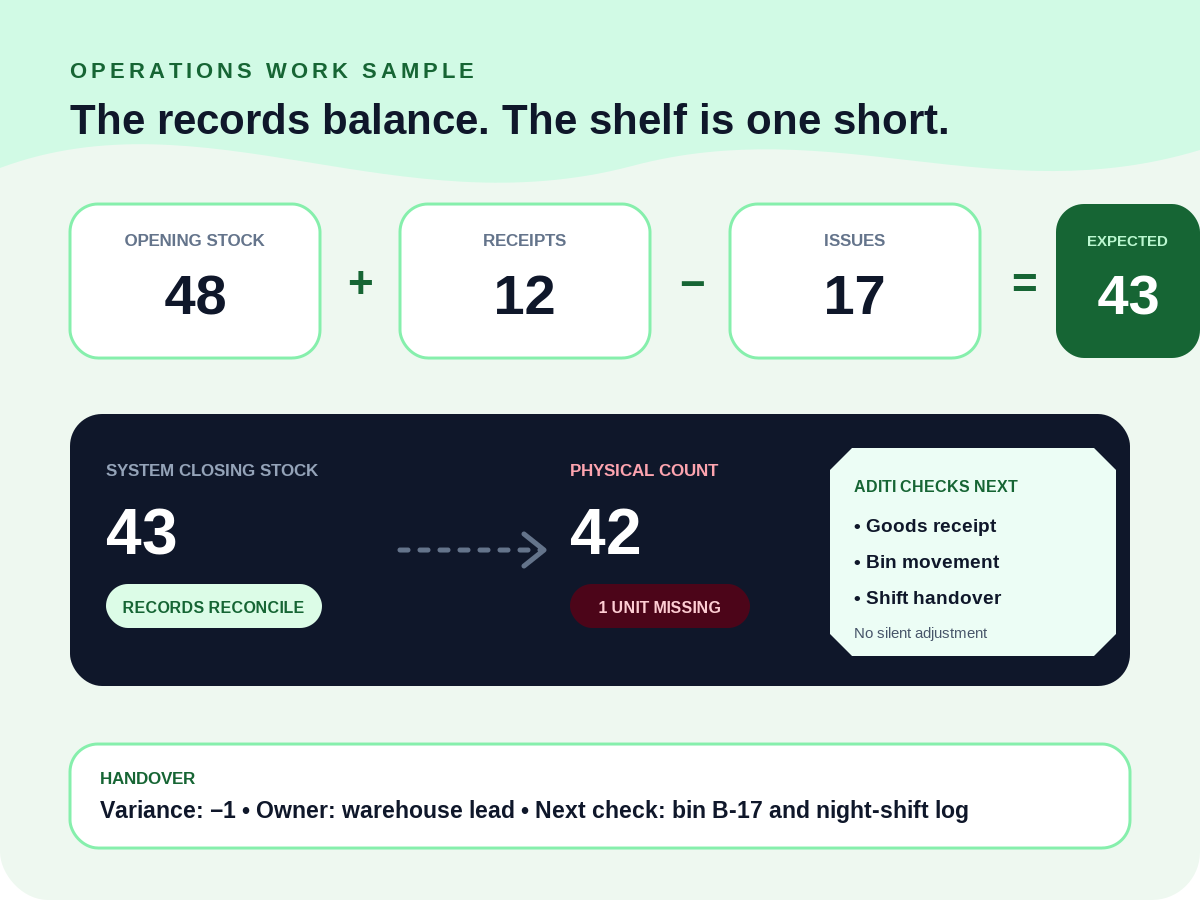
A stock reconciliation where the system expects 43 units but the physical count is 42, leaving one unit for Aditi to trace

Aditi · Logistics operations

Trace one missing unit instead of adjusting the count.

Work sample: opening stock + receipts − issues, compared with the physical count and handed to a named owner.

Interview question: “The entries reconcile but the shelf is still one unit short. What do you check next?”

See operations and logistics paths

Where assessment helps

Use readiness to choose the next question, not to make the hiring decision.

Student

See the full result

A student can use her private overall, technical, behavioural and contextual history to choose what to practise next.

Placement team

Focus the next coaching action

An authorised officer can review detailed scores for an associated student, then decide what practice or explanation to run.

Employer

Use the overall score as context

An employer sees overall LayersRank where permitted. The approved profile, linked work and structured interview still carry the decision.
Read the assessment interpretation guide

What the platform connects

Keep the evidence visible to the right people.

Student: profile headline, bio, skills, education, experience, résumé and approved portfolio links.

Placement team: the associated student profile and detailed quarterly readiness context for coaching and placement work.

Employer: the approved candidate profile, linked work and overall LayersRank after the relevant application or access path.

What people do

Authorship, coaching and hiring stay human.

The student builds the work, removes confidential data and owns every claim.

The placement officer reads the context, chooses the coaching action and coordinates the next drive step.

The hiring team reads the work, asks job-relevant questions and makes the interview and hiring decision.

Choose your next step

Start with the decision in front of you.

Focus placement coaching

Review the associated student and readiness context, then choose the practice that changes the next explanation. Choose College during signup; institutional verification may follow.

Choose Student, Company or College when you sign up.

Select the role that matches you. Company and college registrations may continue to verification after role selection.

Choose your account type